Fakes
Reproduction Fakes
These are rife and I see
them everywhere in shops, markets and antique shows.
They can be bought from wholesalers for very little.
It is worrying that they are being advertised on E-bay and other outlets as
being manufactured in the early 1800's.
Please be careful when buying and ask for a receipt stating the date and condition,
inexperience can be expensive.
The pictures below illustrate some of the designs of the modern imported ware
I also shows a sample of the marks used.
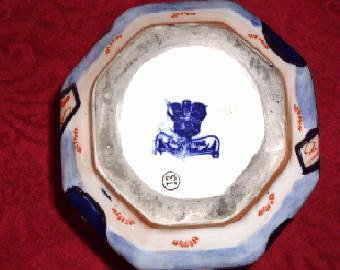
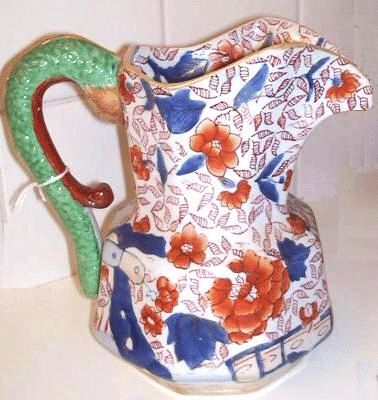
Base of Jug showing the modern
transfer mark,
these Jugs are being sold separately or in sets
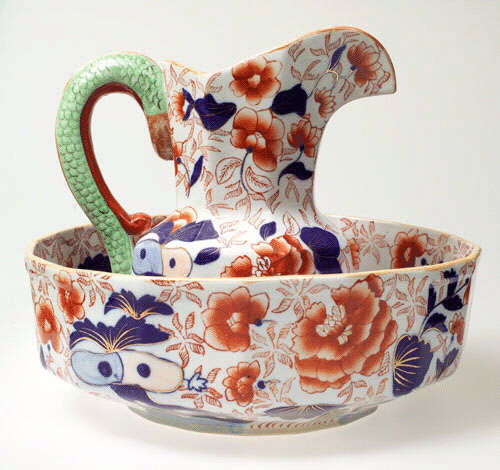
It is worth noting the similarity to the printed Mason's
mark & the pattern very similar to Japan(basket)
& green scale handle.
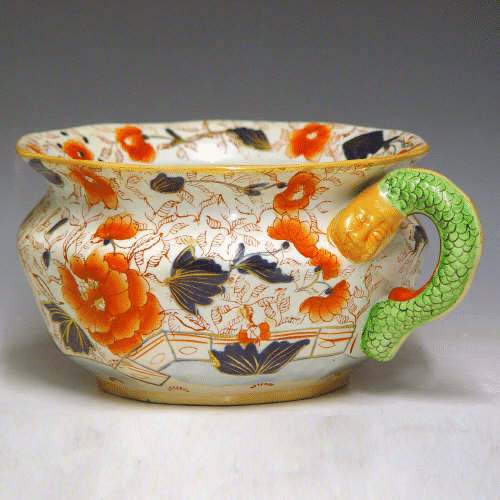
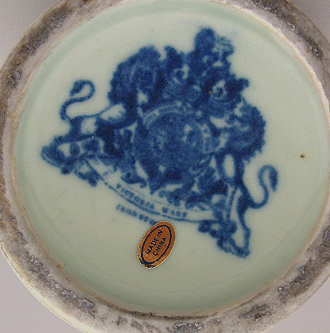
The fake chamber pot above has the Staffordshire Seal Mark &
Victoria Works transfer mark and an added sticky label
'Made in China' easily removed.
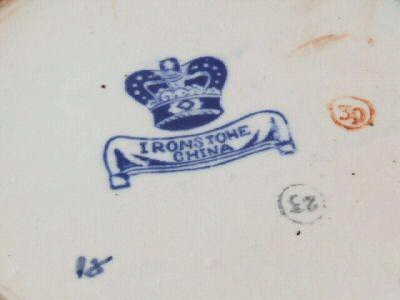
Above another mark being used on
items, in the similar Japan(basket) pattern,
this transfer mark is very similar to one used by Mason's
see MARKS section of this Web Site
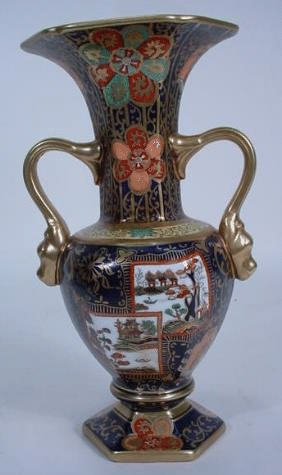
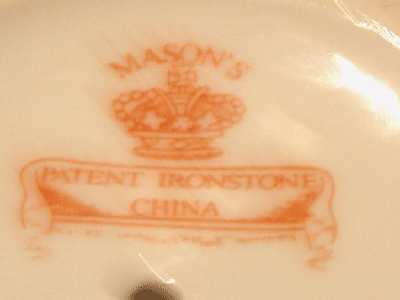
It is worrying that these vases usually 8-9 ins high,
in the 'Reverse Panel' pattern are appearing on the market
with a fake printed Mason's puce crown mark
Please note the dullness of the gilding and the poor moulded
faces at the base of the handles
Antique Mason's Ironstone
Jugs
Illustrated below are antique Mason's ironstone jugs for comparison,
their marks and other general information
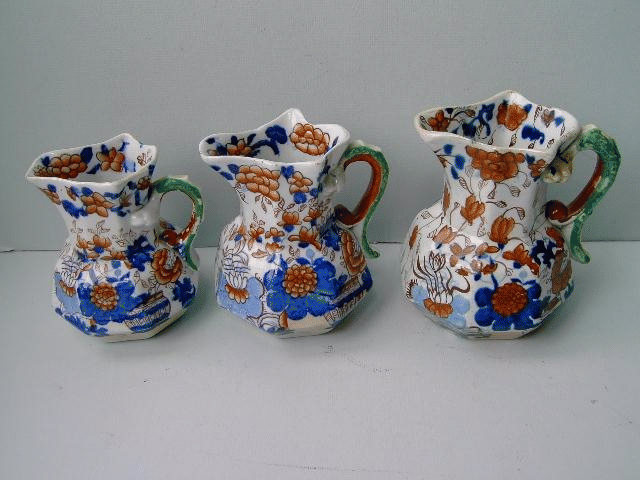
Illustrated a group of Mason's
Jugs, C.1820-30, Japan(basket) pattern
Mason’s jugs are always a favourite with the collectors they were used for
milk,
water or beer . The sizes vary from 1.3/4 ins. to 13 ins and differ by 1.8th inch.
When I started collecting in the early 1960's I thought three was a
complete set then I saw a set of 12 then a set of 15 and some years later on
visiting a client I saw 25 all in a row.
I was amazed and since then have seen several 25 sets.
The most popular shape is octagonal and have snake handles,
Mason’s used many snakes and dragons on their ware. The other handle used is
similar to a branch of a tree, both of these handles are enamelled in green, the green
has in some cases lifted with wear as the green paint used had a high
arsenic content and was very difficult to fire.
Patterns
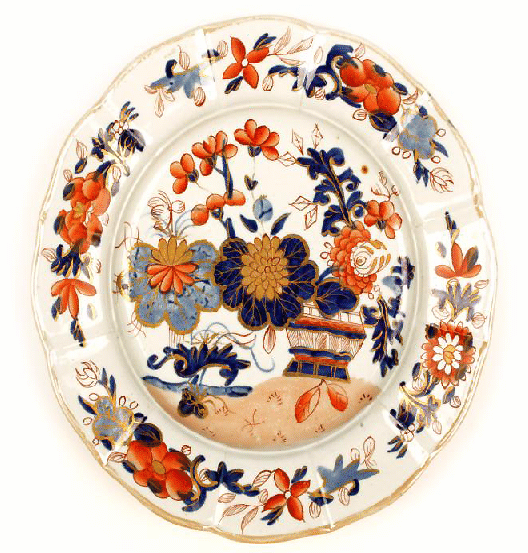
Illustrated 'Japan(basket) Pattern
These were based on the Imari ware that had been imported from China until 1791
when a high tariff was introduced this inspired the manufacturers to try to copy
Chinese ceramics. The most popular pattern is called‘Japan' (basket), as above,
which was transfer printed in blue then hand painted with enamelled reds and blues.
The painting was usually carried out by children aged between 7-11, there would be about 45 children
working under the supervision of several experienced workers.
Child labour in the early 1800’s made up a the majority of the work force of the potteries.
Identification
When collecting one should try to buy the impressed marked jugs then
followed by the transfer printed crown mark.
In this way you can be certain you are collecting the early jugs.
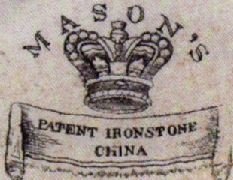
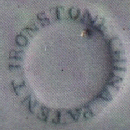
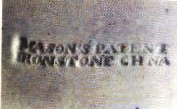
Early Transfer Mark C.1815-25 / Impressed Circle Mark
C.1813-20 / Double Line Impressed C.1815-25
Identifying an item. In 1813 Masons introduced a circular impressed mark
‘Patent Ironstone China’, in 1815 they introduced an impressed mark in one or two lines
'Mason’s Patent Ironstone China’ and a blue transfer printed crown with the word ‘Mason’s’
above the crown, after 1825 the crown marks differ slightly in shape.
In 1830-48 the mark changes shape slightly again.
The crown mark was continued to be used by Wedgwood, who took over the business
in 1978,
until closing the factory in 1997. It is interesting to note that after 1891 the word ‘England’
was added to the printed crown marks and in 1923‘Made in England’was added.
Remember that Mason’s only introduced these early impressed marks,
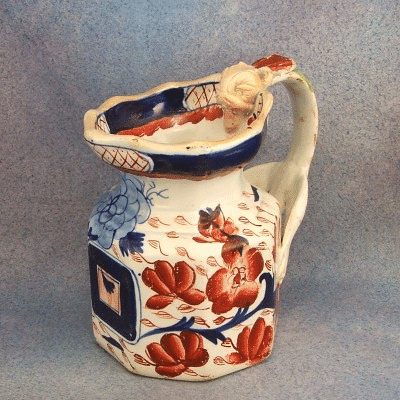
you will find similar jugs as illustrated below with the impressed mark‘Ironstone China’
these are not Mason jugs and were also produced in the 1800's.
Restoration
Slight restoration is acceptable especially when we realize these jugs are
nearly two hundred years old, but restoration must reflect in the price.
A restored jug is usually about 50% less.
Prices
Mason’s introduced many patterns on their jugs, the more unusual patterns
and shape are the most expensive and these can vary greatly in price.
The most common pattern ‘Japan (basket)’ jugs in this pattern cost for sizes
2 inch up to 6inch $100 - $300.
The prices have varied over the past three years due to the introduction of
items listed on Ebay most items have lowered in price.
Please ensure the description and condition is correct when buying.
I hope this chapter has helped you.
For information of factory
history, patterns, marks, events calendar
& a selection of stock enter the Web Site below